Showing posts with label Gelline. Show all posts
Showing posts with label Gelline. Show all posts
Tuesday, December 9, 2008
Overall Class Reflection
I can't believe it, the semester together went by so fast. I was re-reading my past posts and I am shocked at how much i've learned in the past four months. I remember (and read) how i was so lost at what asian american culture was, and now i can be sure of myself when i answer, WHAT DOES ASIAN AMERICAN MEAN TO YOU? in the very beginning of class, we introduced some basic facts on some of the types of asians out there. i can now inform people about the genocide of the cambodian race, the traditional holidays of the vietnamese, and that the chinese food we eat, isn't even really chinese at all! and of course there is more i can say, everyones presentation was awesome! Asian american culture is intricate. next, hyphen magazines opened the many different mediums asian americans are trying to get recognized into. asians in the music scene, the movie scene, and the comedy scene. the many different stories opened me up to their life stories, further helping me understand what asian american culture is. asian american culture is hard work. The fall of the I-Hotel, impacted me on such a level i can't even describe. Introducing me into the racial inequality that was experienced by filipinos. Asian American culture is about community. APATURE actually got me going out there into the world in search of asian american culture and ANALYZING IT. what?! i was exposed to art that reflected the asian achievements in the united states, and of course, the cultural struggle. asian american culture is being recognized. the book Dim sum of all things, was another fun way of experiencing asian american culture through another person's eyes. Share their experiences and thoughts, and yet seem like their your own. asian american culture is comedic. the food portion had to have been my favorite. fusing the two worlds together is all about what asians had to do once they migrated. asian american culture is inevitably creative. cultural invasion gave us a chance to share what we learned so far in the semester with everyone else. reliving the strike was just ineffable. recognizing and thanking our forefathers for handling their business and standing up for what they believed in - THEIR RIGHTS. asian american culture is inspirational. the next project of learning asian american culture through poetry helped me even more absorb the meaning of what it was to be asian - american. it exposed me to those who are MIXED, and what it feels like to have even a little asian in them and how it impacted their life. asian american culture is versatile. our last project, POP was just a final bang! our video incorporated our class from start to finish. from listing the different stereotypes we experienced to the TWLF strike. it gave us a chance to gather all our knowledge and share it with who ever wanted it. finally, ASIAN AMERICAN CULTURE IS MY CULTURE!

Miyazaki's Spirited Away
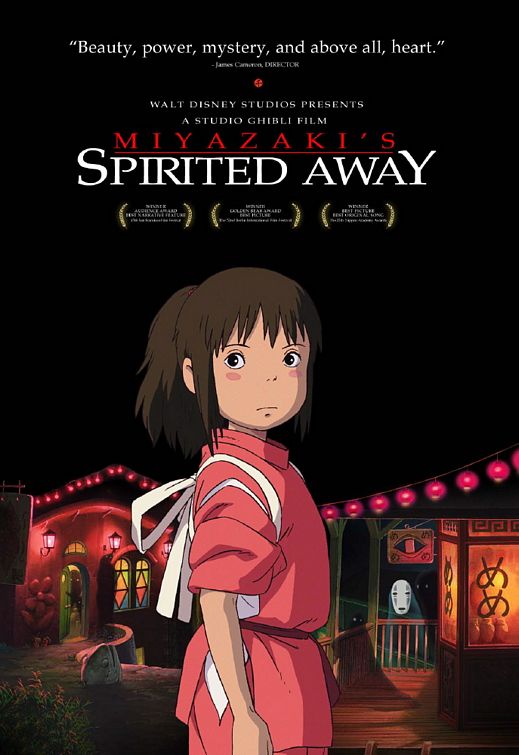
i love this movie, and if you haven't seen it yet, I HIGHLY RECOMMEND IT! well, spirited away is about a young girl named Chihiro. On their way to a new home, Chihiro and her parents take a wrong turn and end up at a tunnel which seemed untouched for decades. Curiously, chihiro's parents wander off into the tunnel, leaving chihiro no choice but to follow. A mysterious town filled with delicious food on display awaited the other side, and without hesitation chihiro's parents eat the food while she wanders around. Darkness falls and strange things start to happen. The town begins to fill with the ghosts of japan's mythology and chihiro tries to leave the town only to find that her parents have turned into pigs and that the tunnel has vanished into a vast ocean. A young boy named haku finds Chihiro and offers to help her find her way back home.
the movie touches upon the major themes we covered in class; identity and the struggle of adapting to a new environment and culture. The movie shows how important identity is to a person by establishing that chihiros name is the key to getting Chihiro home. When chihiro starts to work for ubaba to try and earn her ticket home, ubaba strips chihiros name from her, and now has to answer to sen. by the middle of the movie she almosts forgets her original name completely. this can allude to our discussion in class about how hard it was for asian-americans to remember and keep their original roots once they arrived in this forgein place called united states. this asian identity, because everyone just wanted to fit in and not be so noticeable like chihiro. we see this struggle root from the struggle of adapting to a new environment and culture. chihiro's work isn't easy in the new spiritual world, she works as a servant and has a hard time with getting comfortable with all the different spirits that are around her. She deals with money issues around her, love, establishing friendship and avoiding possible dangers. She quickly grows from this young, very impatient, and cowardly girl into a mature soul.. for she has no other choice but to. The changes in chihiro and her experiences i see reflect those who we learned about in class. the many changes asians had to go through as a whole. stereotypes - chihiro was pictured as weak and useless because she was human. threats from "superior powers" - chihiro was threatened many times by ubaba to leave the bath house. money issues - chihiro dealt with greed in the movie. ETC. overall, this is an excellent film that not only teaches people about the many themes i mentioned up there, but Miyazaki being an asian, decided to allude the movie to the asian struggle in being american.
Poem Response
Here is an excerpt i chose from the poem, Talking to his Reflection in a Shallow Pond by Ai.
Last night, I dreamed of America.
It was prom night.
She lay down under the spinning globes
at the makeshift bandstand
in her worn-out dress
and too-high heels,
the gardenia
pinned at her waist was brown and crumbling into itself.
what's it worth, she cried,
this land of pilgrims' pride?
As much as love, i answered. More.
Ai pictured a young asian-american girl on her prom night. she feels sad and alone, for when she looks around at everyone around her, she feels different and ugly. everyone around her has nice, elegant dresses while she is left with her mother's old dress because their family cannot afford ones like her classmates. Her high heels much too big and outdated for her generation because they are her mother's also. Like the brown little gardenia, she is crumbling. readers can see and feel her struggle with trying to fit into her new culture and environment. but when it all comes down to it, she has to realize that it is for her best, and her family's best to be living where they are, the united states; the land of opportunities.
I chose this poem because i can relate to how this young girl feels and the poem is somehow comforting. In the rest of the poem Ai writes about how much the country has to offer such as "waves of grain" and "purple mountains", and yet she still feels empty inside. Like this awful heaviness is integrated deep within her soul and she wants it to go away. I can see how this can relate to how Asians who migrated here to the United States first felt. Especially for teenagers it must be hard adapting. From the very beginning we see the struggle it is trying to be "American." trying to fit the part with appearance. and after all this work to try and look the part, she still doesnt feel right and the empty feeling leaves her questioning is it all worth it. don't you think this is how they possibly could've felt. Later into the poem, Ai writes about the day dreamers who are reaching out to her as she floats by, and how she just wants to get away from them. this can allude to the many asians who are trying to establish and get the "american dream" but the young girl wants to run away from this because it is a darkening reality trying to achieve the "dream." in this race, it leaves you with an empty feeling as you deal with racism, hardships, money issues, and identity crisis.
Last night, I dreamed of America.
It was prom night.
She lay down under the spinning globes
at the makeshift bandstand
in her worn-out dress
and too-high heels,
the gardenia
pinned at her waist was brown and crumbling into itself.
what's it worth, she cried,
this land of pilgrims' pride?
As much as love, i answered. More.
Ai pictured a young asian-american girl on her prom night. she feels sad and alone, for when she looks around at everyone around her, she feels different and ugly. everyone around her has nice, elegant dresses while she is left with her mother's old dress because their family cannot afford ones like her classmates. Her high heels much too big and outdated for her generation because they are her mother's also. Like the brown little gardenia, she is crumbling. readers can see and feel her struggle with trying to fit into her new culture and environment. but when it all comes down to it, she has to realize that it is for her best, and her family's best to be living where they are, the united states; the land of opportunities.
I chose this poem because i can relate to how this young girl feels and the poem is somehow comforting. In the rest of the poem Ai writes about how much the country has to offer such as "waves of grain" and "purple mountains", and yet she still feels empty inside. Like this awful heaviness is integrated deep within her soul and she wants it to go away. I can see how this can relate to how Asians who migrated here to the United States first felt. Especially for teenagers it must be hard adapting. From the very beginning we see the struggle it is trying to be "American." trying to fit the part with appearance. and after all this work to try and look the part, she still doesnt feel right and the empty feeling leaves her questioning is it all worth it. don't you think this is how they possibly could've felt. Later into the poem, Ai writes about the day dreamers who are reaching out to her as she floats by, and how she just wants to get away from them. this can allude to the many asians who are trying to establish and get the "american dream" but the young girl wants to run away from this because it is a darkening reality trying to achieve the "dream." in this race, it leaves you with an empty feeling as you deal with racism, hardships, money issues, and identity crisis.
Monday, December 8, 2008
Hello Kitty and her many accomplishments

Ever wonder how Hello Kitty came to be, and why is she so loved? Hello Kitty is one of Sanrio's many characters. Sanrio was started by Shintaro Tsuji as the Yamanashi Silk Company in 1960. The company produced a line of character merchandise and it wasn't until 1973 that the company was officially established under the name "Sanrio." The word Sanrio comes from "san" (meaning three in Japanese) and "río" (meaning river in Spanish"). He named the company Sanrio to unify the three rivers of the world. Why? I haven't come across this answer yet. Besides selling their famed character goods, Sanrio also takes part in movie production and publishing. Airing on TV Tokyo in Japan, and CBS in the United States in 1991, "The Adventure of Hello Kitty & Friends" is the first ever made Hello Kitty TV series animation in 3D. They also participate in the fast food industry, running a franchise of KFC in Saitama. They own the rights to the Peanuts characters in Japan and in 2002, they began a joint business with the Walt Disney Company for their greeting cards. Recently, Sanrio went Digital launching Sanrio Digital to expand its brand through the Internet, Online Games and Mobile Services such as Big City Dreams on Nintendo DS.
Hello Kitty was created in 1974, a white cat known for her button eyes, a red ribbon on her left ear, and no mouth. In the very beginning, Hello Kitty, did not have a name and was always pictured sitting down. Her creator decided to forgo a particular expression for Hello Kitty because she wanted Hello Kitty to reflect whatever emotion people were feeling as they looked at her. That's the reason why Hello Kitty does not have a mouth! By 1975, Hello Kitty was named and the Sanrio Company released its first Hello Kitty merchandise, a coin purse picturing Hello Kitty's family. Hello Kitty began to evolve over the years, seen in different poses, atmospheres, and clothing. In 1979, the Hello Kitty world uprooted and in the next year, this kitty sold more than a million watches attracting the young population. Further down the road, Hello Kitty didn't just evolve animatedly, but "Americanly". UNICEF awarded Hello Kitty the exclusive title of UNICEF Special Friend of Children and by receiving that award, Sanrio made hello kitty with a more US design. Trying to expand their audience even further, the black and white series attracted the rest of the grown-up populationby 1987. That same year, a more traditional Kitty design appeared on traditional Japan clothing, in school uniform, beach uniform, and wedding gowns.
None the less, as the years gone by, Sanrio never ceased to surprise the world with many different types of Hello Kitty merchandise and characters. Not only was Hello Kitty seen on accessories, but politically. Since 2004 Hello Kitty has been featured on a MasterCard debit card from Legend Credit Inc. The card was released to teach young girls how to shop and use a debit card. And the most interesting yet, May of 2008 named Hello Kitty the ambassador of Japanese tourism in China and Hong Kong. Hello Kitty has been around my entire life, and yet I can't seem to pinpoint the very reason why i love her so much.
Tuesday, December 2, 2008
AA POET BIO; Ai
 "Ai is the only name by which I wish, and indeed, should be known." - Ai
Ai – a word meaning “love” in Japanese – became the pen name for Florence Anthony. Born on October 21, 1947, in Albany, Texas, she also lived in San Francisco and Los Angeles as a child. “There were good times, but they were always eclipsed by bad times,” Ai recounts for she was impoverished in San Francisco. Ai’s multicultural background – a Japanese father and a Choctaw, Cheyenne, African American, Dutch and Scots-Irish mother – is what keeps her life interesting and is an inspiration for her work. At the age of fourteen Ai began writing poetry to enter a poetry contest, but her family moved back to Tucson before she could submit her entry. Even though she didn’t enter the contest because she had to move, Ai realized that she had skill with the pen. She graduated from the University of Arizona with a bachelor degree in Japanese, and also has a M.F.A from UC-Irvine. She writes about things that come to her through real life happenings as described by the media or personal experience. For example, she can be listening to the radio or watching the news and she hears a particular lyric or newscast that catches her interest.
I decided to choose Ai and her poetry book "Vice" for many reasons. The very first aspect of her that pulled me was her ethnicity, with her background there are vast cultural stories that I can be exposed to and i really like to experience different cultures. The next was her style of writing. She writes about "off-the-wall" and unusual topics that are "hard" to talk about; including sex, rape, etc. this dark side is what i like to read about because it's so different than my real life livings, yet i can relate and it comforts me to know that another person feels the same way i do. After these realizations, i researched and came across some of her poems, and i was hooked onto the mysterious and ambiguous words.
There are several poems that i'm thinking about using, yet i still have yet to pick only three. they are called "The Prisoner", "Talking to His Reflection in a Shallow Pond", and "Blue Suede Shoes", "More", and "Elegy." The first prisoner deals with being interrogated as a terrorist and how much freedom means to a person that has been a PRISONER for so long. The next poem of course has to deal with identity and the cultural struggle with finding that identity balance in America. Next, im not very sure if i understood this poem correctly, but the way i see it, Ai is basically touching upon what a "REAL AMERICAN" is and looks like. what personality and what type of job they are obligated to. next, "More" has to deal with WANTING america, and wanting that American dream as someone who is a minority who cannot achieve the full "american experience." lastly, "Elegy" describes a city undergoing a war.
Saturday, November 15, 2008
asian nerds vs. the cool asians
i was watching Mean Girls and that movie is very sterotypical and the part where they were mapping out the cafeteria, i saw how they divided the asian population into "asian nerds" and the "cool asians" .. and then i started thinking, is that true? hell yeah. i started to think about highschool and how it was very distinguishable.. then i got to thinking globally does it really seem like that out in the "real world?" frankly saying the "asian nerds" were those who were fobs, had glasses, and dressed that look. loved video games and anime and was very in touched with their asian culture. like you can tell, and the movie reflected that. same with the "cool asians" they have that swagger; dressed to impress, have that confidence that makes you know they're cool.
i know this pertains to other races as well, but i will focus on our asian american community. how did this separation come to be? i think that everyone forms their own little nitch with their type of people and thats how cliques came to be. the interesting thing is, is how the general belief integrates thes image and criteria on what is "cool" and thats how we judge people, and maybe not just people - but music, dance, art, movies - everything. and that's why we stereotype the typical cool asian rocking underground hip hop cuhs thats cool. that urban swagger- cuhs thats cool. they rap, dj, break, produce, tag, and play contact sports- cuhs that is cool!
on the other hand, those who represent the soft side of things are not as cool. video games 24/7 photography, tennis, their vastness of knowledge, non-designer clothes.. you get the point.
how do i feel about it? that's just how it is. you can follow the hype, or you can make your own. honestly, i wear whatever i'm comfortable wearing, and although it's not totally bullseye on either being a "cool asian" or an "asian nerd" i do still get pressured into wanting to fall into the category of being "cool" because you are constantly being judged and i want to make a good impression. the "cool" scene influences me everyday and i constantly shape myself to be noticed- what i wear, how i talk, and just how i wanna compose myself. and being an asian american emphasizes this need to be noticed.
being a minority i am already crippled tho - lost in a sea of hella asians and having this hunger to distinguish myself. and by picking a side.. cool or not, you are already weaving yourself out of half the population. and being asian, you really want that. to be noticed out in the world.
i know this pertains to other races as well, but i will focus on our asian american community. how did this separation come to be? i think that everyone forms their own little nitch with their type of people and thats how cliques came to be. the interesting thing is, is how the general belief integrates thes image and criteria on what is "cool" and thats how we judge people, and maybe not just people - but music, dance, art, movies - everything. and that's why we stereotype the typical cool asian rocking underground hip hop cuhs thats cool. that urban swagger- cuhs thats cool. they rap, dj, break, produce, tag, and play contact sports- cuhs that is cool!
on the other hand, those who represent the soft side of things are not as cool. video games 24/7 photography, tennis, their vastness of knowledge, non-designer clothes.. you get the point.
how do i feel about it? that's just how it is. you can follow the hype, or you can make your own. honestly, i wear whatever i'm comfortable wearing, and although it's not totally bullseye on either being a "cool asian" or an "asian nerd" i do still get pressured into wanting to fall into the category of being "cool" because you are constantly being judged and i want to make a good impression. the "cool" scene influences me everyday and i constantly shape myself to be noticed- what i wear, how i talk, and just how i wanna compose myself. and being an asian american emphasizes this need to be noticed.
being a minority i am already crippled tho - lost in a sea of hella asians and having this hunger to distinguish myself. and by picking a side.. cool or not, you are already weaving yourself out of half the population. and being asian, you really want that. to be noticed out in the world.
Wednesday, November 5, 2008
the fight for filipino veterans' rights
For my World Geography class we have this final paper due sometime in December and we get to pick any current event to write about. i decided to write about the issue with our Filipino veterans not getting their full benefits from fighting alongside America in WWII. i chose this because it just sort of interests me and I'm trying to get in touch with my filipino side since i neglected it all my life basically.
I've been doing research for about 2 days now and came up with this timeline. In 1941, the U.S. enters WWII and President Franklin D. Roosevelt later issues an Executive Order that awards Filipinos full veteran’s benefits if they enlist in the U.S. Armed Forces. Then by 1946, President Truman signs the Filipino Naturalization Acts allowing Filipinos to become citizens. Even after approximately 250,000 Filipinos enlist in the U.S. Armed Forces, then fight during WWII, and are now granted citizen rights, the Congress then proceeds to pass the Rescission Act of 1946. In signing this law, Filipino soldiers are then denied the same rights given to other WWII veterans. Outraged citizens fought for these veterans rights and soon in 1990, Congress passes the Immigration Act of 1990, which grants U.S. citizenship and limited veteran benefits to certain Filipino veterans who fought for the U.S. during WWII.
It's crazy how America, this country thats portrayed as AMERICA THE BEAUTIFUL and THE LAND OF THE FREE pulls stuff like this. From what i learned in school it seems like the Philippines has been this country that has been taken advantage of all its life. From the spanish conquer to America's "hospitality" (the I-Hotel to this dilemma with veteran rights). The “Filipino Veterans Equity Acts of 2005.” is being up for discussion now. If passed, the bill would finally give full U.S. benefits to Filipino veterans who live in the U.S. and the Philippines, with an expected cost of $100 million to $150 million every year over a 10 year period. It is currently waiting to be reviewed by the House Committee on Veterans' Affairs.
As much as i would like to see this happen, i wonder if america would prioritize to have this law passed now. i mean, with everything that's been happening with the war and the budgets, it makes me kinda have no doubt that the u.s. will put this off (again) in order to deal with things that are "more important" at this time. for now all we can do is to support the filipino vets. i know of many organizations that are sending balikbayan boxes full of necessities to those vets in the philippines and there are many protests that are happening all over the world. we're just gonna have to see what happens next.
I've been doing research for about 2 days now and came up with this timeline. In 1941, the U.S. enters WWII and President Franklin D. Roosevelt later issues an Executive Order that awards Filipinos full veteran’s benefits if they enlist in the U.S. Armed Forces. Then by 1946, President Truman signs the Filipino Naturalization Acts allowing Filipinos to become citizens. Even after approximately 250,000 Filipinos enlist in the U.S. Armed Forces, then fight during WWII, and are now granted citizen rights, the Congress then proceeds to pass the Rescission Act of 1946. In signing this law, Filipino soldiers are then denied the same rights given to other WWII veterans. Outraged citizens fought for these veterans rights and soon in 1990, Congress passes the Immigration Act of 1990, which grants U.S. citizenship and limited veteran benefits to certain Filipino veterans who fought for the U.S. during WWII.
It's crazy how America, this country thats portrayed as AMERICA THE BEAUTIFUL and THE LAND OF THE FREE pulls stuff like this. From what i learned in school it seems like the Philippines has been this country that has been taken advantage of all its life. From the spanish conquer to America's "hospitality" (the I-Hotel to this dilemma with veteran rights). The “Filipino Veterans Equity Acts of 2005.” is being up for discussion now. If passed, the bill would finally give full U.S. benefits to Filipino veterans who live in the U.S. and the Philippines, with an expected cost of $100 million to $150 million every year over a 10 year period. It is currently waiting to be reviewed by the House Committee on Veterans' Affairs.
As much as i would like to see this happen, i wonder if america would prioritize to have this law passed now. i mean, with everything that's been happening with the war and the budgets, it makes me kinda have no doubt that the u.s. will put this off (again) in order to deal with things that are "more important" at this time. for now all we can do is to support the filipino vets. i know of many organizations that are sending balikbayan boxes full of necessities to those vets in the philippines and there are many protests that are happening all over the world. we're just gonna have to see what happens next.
Sunday, November 2, 2008
midterm; cultural invASIAN
Commemorating the Third World Liberation Strike was insane. Starting off with that film, how can the police especially, have the train of thought thinking they could use guns and batons as a solution to the silent strike for ethnic studies? And how can this college I’m going to integrate a vocational track, underlyingly indicating wealth is needed to be given the chance to succeed? It’s like when your born middle class, you’re already screwed – you can’t become nearly as successful as those already privileged. When Irene asked the class what we strike for, most the class stayed silent. That’s all it took to recognize the unity of our generation. There is none. Our generation is changing by the millisecond and we spend a lifetime tryna keep up and we ain’t got time to fight for what’s happening now. I see most of the world praying for gas prices to go down, for the recession to pass over, for budget cuts not to happen. There are too many hopeful thoughts and not enough hopeful action. Too caught up in getting what’s “mine” and not giving a fuck about what’s “yours.” All this anger and grief had me needing to write a poem, which was perfect for our midterm presentation.
I am in hunger desperation for a thing called
IDENTIFYCATION……..
Cats be so hungry nowadays for a solution,
A conclusion for every damn equation they see.
Like……..
“I ain’t got time for no common sense, no common people,
No common values, no common determination, no common –
EDUCATION……….
And I especially ain’t got no goddamn time to spend a cent
On your common Third World Liberation. *
But it was this implication that
40 years later racism cannot exist – or can it?
Inspire and give me a situation no one has ever considered
Because I still see racism being considered in every
Judgmental potential.
Man, who the hell… really cares?
1968- a silent fight for equal rights
2008 – now you tell me what we strike for
I’m not a pro or anything but I say what is simply there. Why cut ethnic courses here when we’re the only college that has a college of ethnic studies in the U.S? The skit and fashion group went on the 30th and they were awesome! I was so hyped to support this “strike re-enactment” that I wonder, if another one goes down – will I really support it FOR REAL?
I am in hunger desperation for a thing called
IDENTIFYCATION……..
Cats be so hungry nowadays for a solution,
A conclusion for every damn equation they see.
Like……..
“I ain’t got time for no common sense, no common people,
No common values, no common determination, no common –
EDUCATION……….
And I especially ain’t got no goddamn time to spend a cent
On your common Third World Liberation. *
But it was this implication that
40 years later racism cannot exist – or can it?
Inspire and give me a situation no one has ever considered
Because I still see racism being considered in every
Judgmental potential.
Man, who the hell… really cares?
1968- a silent fight for equal rights
2008 – now you tell me what we strike for
I’m not a pro or anything but I say what is simply there. Why cut ethnic courses here when we’re the only college that has a college of ethnic studies in the U.S? The skit and fashion group went on the 30th and they were awesome! I was so hyped to support this “strike re-enactment” that I wonder, if another one goes down – will I really support it FOR REAL?
Sunday, October 19, 2008
Final book review on D.O.A.T
Kim Wong Keltner’s, The Dim Sum of All Things is a refreshing outlook on modern Asian American culture. Brilliantly crafted, Keltner reflects upon stereotypes and contemporary struggles with being Asian American through her character, Lindsey Owyang. Lindsey’s comic approach through all sorts of relationships, womanhood, and identity struggle lets readers bond with her and her San Franciscan surroundings. The book opens with Lindsey’s experiences with encountering “Hoarders of all things Asian.” Seemingly nothing out of the ordinary, Keltner illuminates the many guys who try to pick up on Lindsey just because of her race; with trying to talk to her in slow English as if she can’t understand, trying to show off how much they know about the Asian culture, and stereotypically questioning her if she was carrying groceries for a restaurant.. This first scene comforts readers into a familiar realm and emphasizes the life-long pondered question, “Why do white guys have this fetish for Asian women?” As she arrives at work as a quiet secretary for a tribune, Keltner presents her audience with Lindsey’s reactions when it came to her secret crush, Michael Cartier. It is especially a hilarious moment when Lindsey fantasizes about Michael and when she comes into interaction with him, for she melts into this child like state. This characteristic is present amongst all women and it is a clear connection Keltner makes in order to link all cultures together; revealing Keltner’s reflection on interracial dating. The novel could have continued without this relationship for I thought it was pathetic and it didn’t contribute any growth to the story, but the simple frustration felt with Michael does portray the struggle with gender and age. Not only does the author reflect on love relationships, but also a relationship with one’s culture. Readers see this when Michael comes over to her apartment whom she shares with her Chinese grandmother, Pau Pau. Desperate to cover up the “Asian smell” of her apartment and Pau Pau’s cultural trinkets, something as simple as Lindsey’s insecurity of how her apartment smells like is very symbolic. In an attempt to mask the Asian-ness, Keltner reflects on the identity crises within the Asian population trying to be American in order to fit in. This theme is apparent upon Lindsey’s outfits, friends, choice of food, and language which is all connected through Pau Pau. Pau Pau acting as this main link to her Chinese culture, readers watch Lindsey flourish from being embarrassed about the unfamiliar ways of the Chinese, to a content acceptance which begins to evolve into appreciation at the end of the novel. This journey was not easy. The climax occurred when Lindsey was actually being forced into visiting China itself. Her epiphany of first hand experiencing her culture shed light on the generational struggle with retaining one’s culture after living and being so contacted by another. Filled with heartwarming events, Kim Wong Keltner’s story is more than words on paper; it is a journey of finding ones place in society while still retaining one’s cultural makeup.
Tuesday, October 7, 2008
Reflections on Dim Sum
Right off the bat, Lindsey Owyang (the main character) is my kind of girl! Didn't remind me too much of myself, but enough to laugh and say, "I know what you mean girl!” The Dim Sum of all things by Kim Wong Keltner had me agreeing one way or another with every page flipped over.
First things first, Keltner addressed the historic puzzler for all Asian women, what is it with guys that are into Asians? I’ve asked a couple of my non-Asian friends before and I remember them saying it has to do with being different – foreign – exotic. I always thought that was the role of European models, but they also said the food, culture and “cuteness” Asian Girls have blind them into a trance. “You guys are great looks, book smarts, obedience, great food, and exciting history all in this little cute package that I wanna take home, keep forever, and show everybody!” my friend B said. I guess it goes the same for Asian girls and white guys. Lindsey and Michael’s relationship cracks me up because she’s so innocent and oblivious to relationships that she doesn’t know how to properly act when it comes to Michael. But that’s how it is for most girls, but the whole “white thing” – I gotta admit, I’m like that too. Difference is exciting, new, and something that keeps you wanting to learn more about it. I mean, all my life I’ve been surrounded by Filipinos and dating other Filipinos is too familiar and is like dating a family member. So why white guys instead of other Asians or other races? “American” is what we strive to be right?! When it all comes down to it, we long for achieving that “American Dream.” It’s like searching for acceptance because we are different, and it’s not like being with some white guy will ultimately give us that, but in a sense it’s the chance at really feeling American, and that is what attracts us Asian women to white guys – for me at least, despite their ways of cuteness.
The book also reflected upon interracial relationships. With Lindsey’s cousin Stephanie, she marries Mike who is white and her father didn’t talk to her for months because of that. Why is that? Most parents, as done mine, teach their children to love and give love – they never specified to whom and what race – why now when Stephanie brings home a white man? Was it seen as disrespectful? Or was it a personal hate integrated within her father? Either way, I wouldn’t know how that mindset would continue up until now. This is still something that perplexes me, as well as Lindsey.
First things first, Keltner addressed the historic puzzler for all Asian women, what is it with guys that are into Asians? I’ve asked a couple of my non-Asian friends before and I remember them saying it has to do with being different – foreign – exotic. I always thought that was the role of European models, but they also said the food, culture and “cuteness” Asian Girls have blind them into a trance. “You guys are great looks, book smarts, obedience, great food, and exciting history all in this little cute package that I wanna take home, keep forever, and show everybody!” my friend B said. I guess it goes the same for Asian girls and white guys. Lindsey and Michael’s relationship cracks me up because she’s so innocent and oblivious to relationships that she doesn’t know how to properly act when it comes to Michael. But that’s how it is for most girls, but the whole “white thing” – I gotta admit, I’m like that too. Difference is exciting, new, and something that keeps you wanting to learn more about it. I mean, all my life I’ve been surrounded by Filipinos and dating other Filipinos is too familiar and is like dating a family member. So why white guys instead of other Asians or other races? “American” is what we strive to be right?! When it all comes down to it, we long for achieving that “American Dream.” It’s like searching for acceptance because we are different, and it’s not like being with some white guy will ultimately give us that, but in a sense it’s the chance at really feeling American, and that is what attracts us Asian women to white guys – for me at least, despite their ways of cuteness.
The book also reflected upon interracial relationships. With Lindsey’s cousin Stephanie, she marries Mike who is white and her father didn’t talk to her for months because of that. Why is that? Most parents, as done mine, teach their children to love and give love – they never specified to whom and what race – why now when Stephanie brings home a white man? Was it seen as disrespectful? Or was it a personal hate integrated within her father? Either way, I wouldn’t know how that mindset would continue up until now. This is still something that perplexes me, as well as Lindsey.
Friday, October 3, 2008
Home is where your stomach is haha!
I rarely have Filipino food. I am 100% Filipino but I’m honestly really Americanized. I know, just by reading that first line a lot of you are gonna be like “BOOOO!” and I feel ya, it sucks, but hey, it’s the truth. Basically going back to the Philippines every 2 years since I was born, was the only time I was truly eating Filipino food. But back here in the states, I continued to eat what everyone else considered “normal food.” Burgers, fries, hotdogs, burritos, pasta… I loved thai food, sushi, and my grandma’s cooking although (but it was always nothing too wild as to please my grandfather’s American palette). The only Filipino dishes I grew up with were stuff from Goldilocks, Jollibee, and dishes from the simple Filipino recopies book. Such as Lumpia, pancit (polabok), menudo, adobo and your basic desserts – toron, leche flan, halo halo… I don’t dare touch the hard core Filipino dishes –Dinaguoan, sinigang, lechon… I might be missing out, but I can’t handle that stuff after eating American food practically all my life.
My home may taste generic by quick take outs and easy cookings, but what I can provide you guys with are insight on how my home tastes like on the holidays, birthdays, or special occasions. This is definitely different than my average fast food life! Let’s start off with Thanksgiving! Traditionals include spicy stuffed turkey, sweet cranberry sauce, seasoned mashed potatoes and gravy, sour lemon bars and pumpkin pie. Twists to our meal include Mediterranean lamb racks and cheesy quiche, compliments to my Turkish uncle. My dad puts in grilled salmon and mango salad, while my mom provides a tart cake for my sister’s birthday.
Christmas is a mix of tastes also. Mexican rice, grilled vegetables, roast beef, Pad Thai noodles, more grilled salmon and mango salad, Southern sweet potatoes and ham soup, creamy mushroom chicken, Turkish delights, Oreo cheesecake, and of course decorated sugar cookies. I guess Filipino food gets catered to birthdays/special occasions. That and Chinese food, or Hawaiian bbq because those are easiest to be delivered in bulk haha! Filipino desserts empower these birthday parties too because they’re so convenient and it’s not like anyone can resist a good Filipino dessert.
Although regular meals don’t bring my family together – holiday feasts definitely do and that’s when all sorts of dishes from different places and culture cooperate and come together.
My home may taste generic by quick take outs and easy cookings, but what I can provide you guys with are insight on how my home tastes like on the holidays, birthdays, or special occasions. This is definitely different than my average fast food life! Let’s start off with Thanksgiving! Traditionals include spicy stuffed turkey, sweet cranberry sauce, seasoned mashed potatoes and gravy, sour lemon bars and pumpkin pie. Twists to our meal include Mediterranean lamb racks and cheesy quiche, compliments to my Turkish uncle. My dad puts in grilled salmon and mango salad, while my mom provides a tart cake for my sister’s birthday.
Christmas is a mix of tastes also. Mexican rice, grilled vegetables, roast beef, Pad Thai noodles, more grilled salmon and mango salad, Southern sweet potatoes and ham soup, creamy mushroom chicken, Turkish delights, Oreo cheesecake, and of course decorated sugar cookies. I guess Filipino food gets catered to birthdays/special occasions. That and Chinese food, or Hawaiian bbq because those are easiest to be delivered in bulk haha! Filipino desserts empower these birthday parties too because they’re so convenient and it’s not like anyone can resist a good Filipino dessert.
Although regular meals don’t bring my family together – holiday feasts definitely do and that’s when all sorts of dishes from different places and culture cooperate and come together.
Sunday, September 28, 2008
APAture 2008; COMICS AND ZINE EXPO

For my Asian American Culture class we were required to attend at least one of the APAture events that were being held for 10 days in San Francisco. APAture celebrates and displays Asian Pacific American heritage to everyone in the form of art, music, performance, and more. I went to the closing event for APAture today and it offered a COMICS AND ZINE EXPO. It wasn’t as I expected because in my head I was picturing a big floor filled with all these animated pictures of heroes and villains, like a typical comic convention.. But this place was small, like a studio where you can take literally 30 steps and you’ve already seen the whole room. But within those 30 steps, I was able to enrich my eyes with the most individualistic pictures.

I’ll just walk you through what I experienced there and because art is left up to your imagination, I’ll let you guys into what I felt and thought when I saw these pictures. Okay, when you first walk up the stairs you come face to face with a tree. It was basically water-colored paint smudges on current news paper clippings forming this tree. Covering articles about death, rape, and the depression that is about to take forth, I think this tree symbolized how the world needs to be united and be a family to support each other through the hard times that are about to come through.
Walking into the actual expo room, the table full of comics was the first thing that caught my eye. I got to meet Hellen Jo who is the main artist of Jin and Jam comics. Although I didn’t get to talk to her personally about her comics because she was doing an interview for APAture, I got to read some of her work and let me just say, they’re really BLUNT. The main theme of her comic strips that I came across was sexuality. She approached the subject as a natural occurrence in life, and I’m thinking that’s what she would like to portray to the world. Jin & Jam 1, published by Sparkplug Comic Books will debut at the Alternative Press Expo this year, on November 1 & 2.
The next picture I enjoyed was this fingerprint made up of Japanese stamps. To me, this taught me that a person’s identity and culture never leaves a person; it is literally integrated in a person’s body. And this is what I’m coming to find. With this Asian American culture class I’m becoming more curious with not just my own, but different Asian cultures.

The next art work that intrigued me was the tanks that were made out of fuzzy material. They were lined up and leading to a giant explosion looking piece that was made up of these individual tanks. Along with this theme, there were shoes, spray painted camouflage and laid across fake grass. It brought me back to what I learned in class through the culture presentations and how each culture experienced some hardship along the way.

Lastly, my favorite artwork out of the entire gallery was a box you stick your head into. It was attached to the ceiling so you’d have to climb up there and when you look around inside that tiny box, it made me feel I was in a wheat field of some sort, the mirrors creating this vast image of never ending wonder of what the world can offer a person. I guess this is how people who dedicated their life to working in the fields felt.
I just wish they had a friendlier environment because everyone there was busy fixing things. I would have liked to be confronted with information about each artwork because I would’ve liked to have known what each artist was thinking and feeling when making their artwork. It’s okay because that’s what art galleries are all about, interpreting your own thoughts. This APAture event basically tied everything I learned so far in class. The whole gallery had themes about what Asian American culture is all about; family, sexuality, finding one’s identity, and past suffering. Although before I left, one person came up to me and started explaining APAture’s organization and how to get involved in it. And yes, I did join the mailing list (=
Wednesday, September 24, 2008
Fast and furious (Drift, Drift, Drift)
So on Saturday the 20th of September, was Hot Import Night's NightShift event in Pleasanton. Basically Hot Import Nights (HIN) is the country's largest touring car event. With displays of numerous customized show cars, this pop culture experience also features live music, dance performances, and of course.. HOT IMPORT MODELS haha. The NightShift that I went to is a "sister event" which includes all the features of HIN, but with the addition of drift demos and bike stunts.
Cars and swooping them up is enjoyed by many, so tell me why it’s mostly associated with Asians? Like, why where there hella Asians there at HIN? How did it get to the point of us taking over the street racing? Every day life; whenever going down the street and you hear a loud ass car, “Ohhh… RICER!” like you can hella distinguish the typical swooped out Hondas with huge exhausts as “Asian”..
So at HIN is it mainly Asians because they were drifting at the event? This question led me to look up the history of drifting. According to Wikipedia, drifting started out as a popular racing technique in Japan races over 30 years ago. Kunimitsu Takahashi, was the creator of drifting techniques in the 1970s. As professional racers in Japan drove this way, so did the street racers. Keiichi Tsuchiya became particularly interested by Takahashi's drift techniques. Tsuchiya began practicing his drifting skills on the mountain roads of Japan, and this quickly became a hit and inspired many of the professional drifting drivers on the circuits today. By 1996 drifting hit California. Today, drifting has evolved into a competitive sport in Japan, Malaysia, Australia, UK, Canada, and New Zealand.
But it wasn’t even Asians who started this street racing. Street racing is reported to have originated prior to the 1930s due to alcohol prohibition in the US, and became very common after the war. I guess basically after drifting was invented by the Japanese, Asians pretty much took over the scene and when it got popular, basically all Asians supported it. HIN I guess is mainly an Asian event because when something originated in a specific race, like in this case, Japanese which automatically selects all asians, that race will PROUDLY SHOW IT OFF because everyone is trying to distinguish themselves and show what they can offer the world.
All this makes me think about Tokyo Drift and how that movie pretty much portrayed HIN with all the Asian import models dressed to add extra sexiness to the cars because what do boys like better than their girls and cars =P
HIN's flyer

swooped up TC

me and my hellokitty :D

Drifting vid
Cars and swooping them up is enjoyed by many, so tell me why it’s mostly associated with Asians? Like, why where there hella Asians there at HIN? How did it get to the point of us taking over the street racing? Every day life; whenever going down the street and you hear a loud ass car, “Ohhh… RICER!” like you can hella distinguish the typical swooped out Hondas with huge exhausts as “Asian”..
So at HIN is it mainly Asians because they were drifting at the event? This question led me to look up the history of drifting. According to Wikipedia, drifting started out as a popular racing technique in Japan races over 30 years ago. Kunimitsu Takahashi, was the creator of drifting techniques in the 1970s. As professional racers in Japan drove this way, so did the street racers. Keiichi Tsuchiya became particularly interested by Takahashi's drift techniques. Tsuchiya began practicing his drifting skills on the mountain roads of Japan, and this quickly became a hit and inspired many of the professional drifting drivers on the circuits today. By 1996 drifting hit California. Today, drifting has evolved into a competitive sport in Japan, Malaysia, Australia, UK, Canada, and New Zealand.
But it wasn’t even Asians who started this street racing. Street racing is reported to have originated prior to the 1930s due to alcohol prohibition in the US, and became very common after the war. I guess basically after drifting was invented by the Japanese, Asians pretty much took over the scene and when it got popular, basically all Asians supported it. HIN I guess is mainly an Asian event because when something originated in a specific race, like in this case, Japanese which automatically selects all asians, that race will PROUDLY SHOW IT OFF because everyone is trying to distinguish themselves and show what they can offer the world.
All this makes me think about Tokyo Drift and how that movie pretty much portrayed HIN with all the Asian import models dressed to add extra sexiness to the cars because what do boys like better than their girls and cars =P
HIN's flyer

swooped up TC

me and my hellokitty :D

Drifting vid
Wednesday, September 17, 2008
Filipino Parents, oh my gulay!
Have any of your parents (or Filipino “family members”) ever talked about you in Tagalog (or any other dialect) right in front of you?! I mean, they’ve been doing it since I can remember. They take some sort of sick pleasure in doing that. When I was little I never knew what they were all talking about so it wasn’t a big deal to me, but now that I do understand Tagalog, they still do it! They talk to all my other “aunties and uncles” about inappropriate things. About me and my boyfriend’s fights they manage to hear about, how I lashed back at them the other week about going out, or just other personal stuff which are pretty embarrassing. I mean, come on! What gets to me the most is about college and my future, and let me stress the word MY! Everyone asks my parents, “Oh what is Gelline taking?” They reply, “Business Administration, but she doesn’t really know what she wants.” And they laugh about it and continue discussing careers they wish I would to pursue. It’s kinda a slap in the face because I know they talk about it in a specific tone I may only recognize as MOCKING, but why in front of me THROUGH other people, and WHY IN TAGALOG? This passive aggression runs through hella generations before me because I observe the same guilt talk from my grandparents toward my parents and so on. I know this may not be just a Filipino thing, but I mean... Filipinos are such emotion, non-aggressive and expressive people (Most although from my experience). Seriously, all I see is them taking the easy way out – not expressing their opinions, keeping it to themselves; whether it has to do with how they feel about one of their family member’s decisions or whatnot. They don’t like to have one-on-one conversations, they criticize passively. I guess the knowledge of voicing out, I learned and practiced as an American... Being STRONGLY OPINIONATED and open to other people’s feelings. That’s why I guess I clash with my parents and a lot of my Filipino friends do also. Does it have to do anything with being the third generation? Honestly, It’s funny how this topic circles all back to the importance of family relationships, closeness, and bonds because despite all the somewhat shit talking... Filipinos are so closely knit - Blood families connected with other non-blood families and establishing a hold as strong as blood. I guess this act of passive aggression is just a quirk because I know in the end, the good outweighs the bad. I know there’s a couple more pet peeves I have about our cultural and Filipino parents in general (like strictness) haha but I’ll save that till next time. <3
What does Asian American mean to you?
Well, I’m gonna be honest. I have no idea what Asian American Culture means... Its kinda like, I’m full Filipino and I don’t even really know what’s up with my culture. Like when Independence Day is or like, our certain superstitions and customs, I really don’t even know the backdrop to those kinna things. It’s really on me though, because even though neither of my family members taught me about the Filipino culture and even though teachers weren’t up to the challenge of teaching Filipino history, I could’ve done something about it and educate myself. And I guess that’s how it is now a days... I can go up to anyone and just ask them the history of their heritage and I bet you a lot won’t be able to give me the answer. I don’t know, maybe I’m wrong... But I have yet to BE proven wrong you know. I guess it’s just the western movement. Everyone’s caught up in the American dream that everything is just "Americanized" cuz that’s the reality and the ‘hype’.. Fuck the hype man, it sucks that everything got so fusionized that we don’t know what the original ingredients are... I mean, don’t get me twisted its cool that mixing different cultures and people together is happening. it’s just that we lost sight of where we all come from and I don’t really like that. Let’s try to keep culture alive... And not just by celebrating it but moreover by gaining the knowledge as to why we're celebrating... and acknowledging how beautiful it is. EMBRACE EVERY SINGLE CULTURE!
But if I had to give a straight “ANSWER THE QUESTION” based opinion on what Asian American means to me, I’d have to basically say inspiration leaders.. family, friends, determination, dignified, .. all those things combined into one identity. From my knowledge, I heard boundless stories of the struggle to get to America and I learned how focused these Asian Americans were to try and reach this goal of getting to America JUST TO LIVE. And not only was it a struggle to get here, but a struggle to stay here. With racisim thrown into the picture, with culture shock, with finding jobs that were limited due to qualifications, etc… to me, I have such respect for this “Asian- American” identity, which we (the Asian-American race) all hold within ourselves, even if we didn’t personally experience these things because somewhere in our blood line has.
*First published on personal blog; xanga.com/x3_gelline on sept 4 2008. Copied &extended here on blogspot (=
But if I had to give a straight “ANSWER THE QUESTION” based opinion on what Asian American means to me, I’d have to basically say inspiration leaders.. family, friends, determination, dignified, .. all those things combined into one identity. From my knowledge, I heard boundless stories of the struggle to get to America and I learned how focused these Asian Americans were to try and reach this goal of getting to America JUST TO LIVE. And not only was it a struggle to get here, but a struggle to stay here. With racisim thrown into the picture, with culture shock, with finding jobs that were limited due to qualifications, etc… to me, I have such respect for this “Asian- American” identity, which we (the Asian-American race) all hold within ourselves, even if we didn’t personally experience these things because somewhere in our blood line has.
*First published on personal blog; xanga.com/x3_gelline on sept 4 2008. Copied &extended here on blogspot (=
Tuesday, September 16, 2008
Dear Harry Mok, the editor in chief of Hyphen Magazine
Never in my life was I so intrigued in a magazine filled with so many words! Not only were these words insightful, but hilarious and inspirational. Thank you so much for the article, "Postcards From the Middle" in your Road Trip Issue. These short stories written by the actual protagonists themselves add a sense of reality and truthfulness to the paragraphs I read. It touches upon segregation in the 1980s, raw scenic corridors of migrated Asian families, and making the best of what was given; subjects I never had first hand experiences with, but still felt the mixed emotions that were being portrayed. Surprisingly, one particular story dealt with the choice of erasing their Asian culture and choosing to replace it with another (black or white in this situation). I have to say, this concept upsetted me, the lifestyle of limited culture takes away the knowledge of a whole other part of the world. I think that culture is essential, and it should be shared and embraced by all. That is what your magazine has opened my eyes to. Although there were many spelling and grammatical errors, they never tarnished the eloquent material of Hyphen.
- Gelline Mejia
Elk Grove, Ca
Ethics 210
- Gelline Mejia
Elk Grove, Ca
Ethics 210
Subscribe to:
Posts (Atom)
